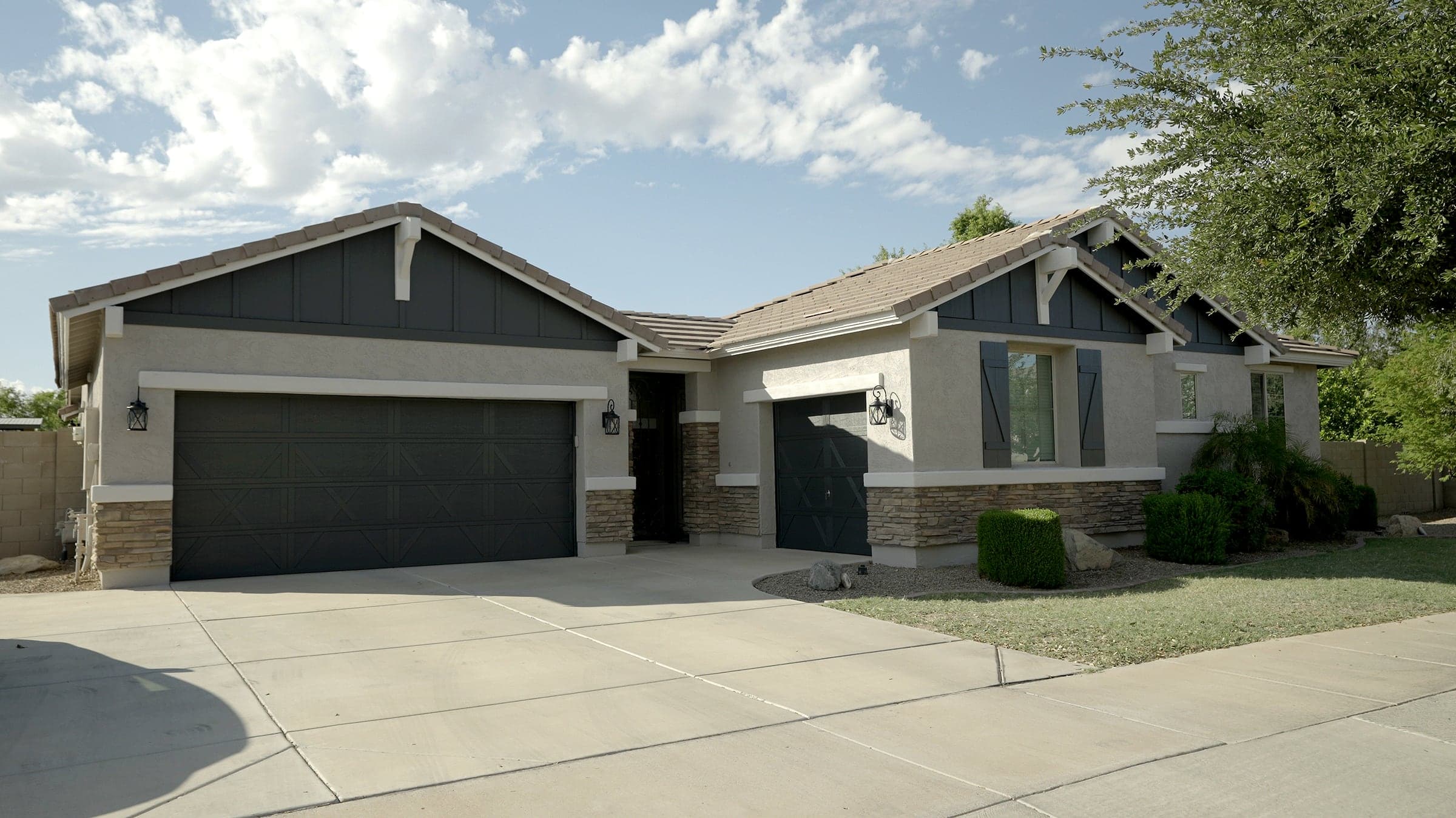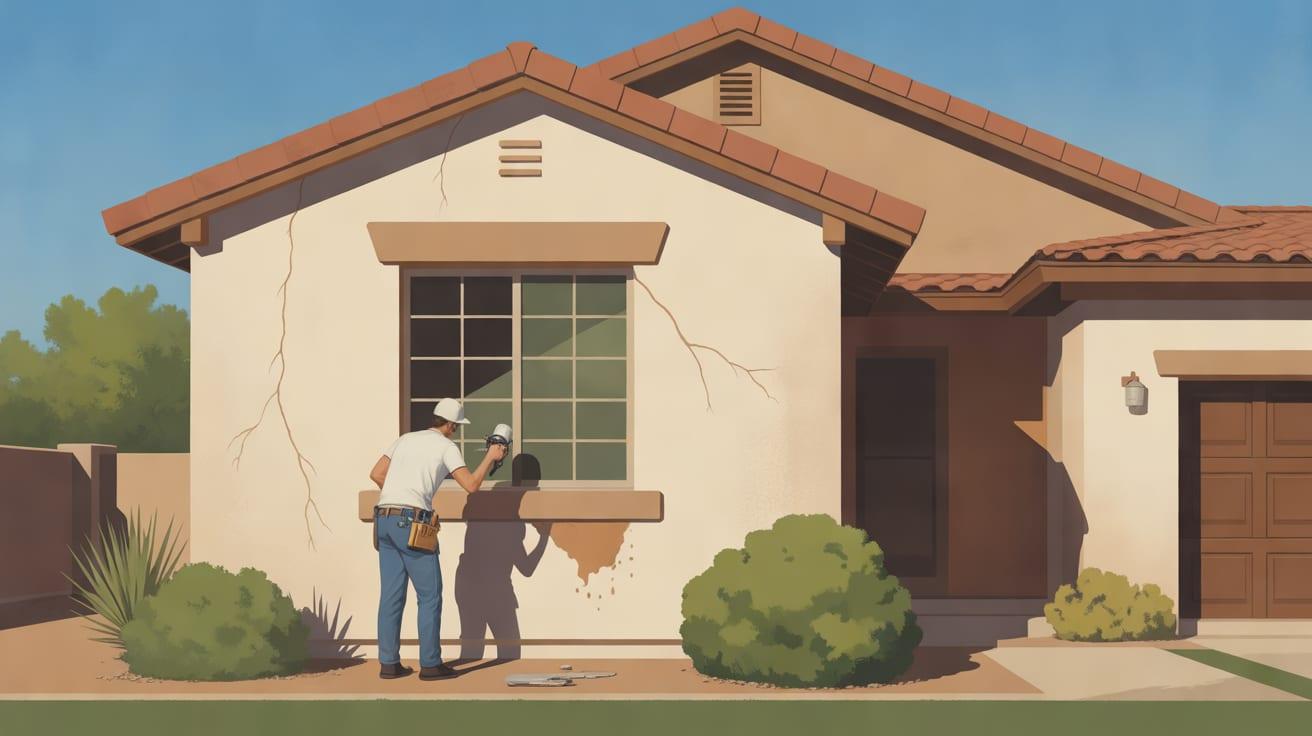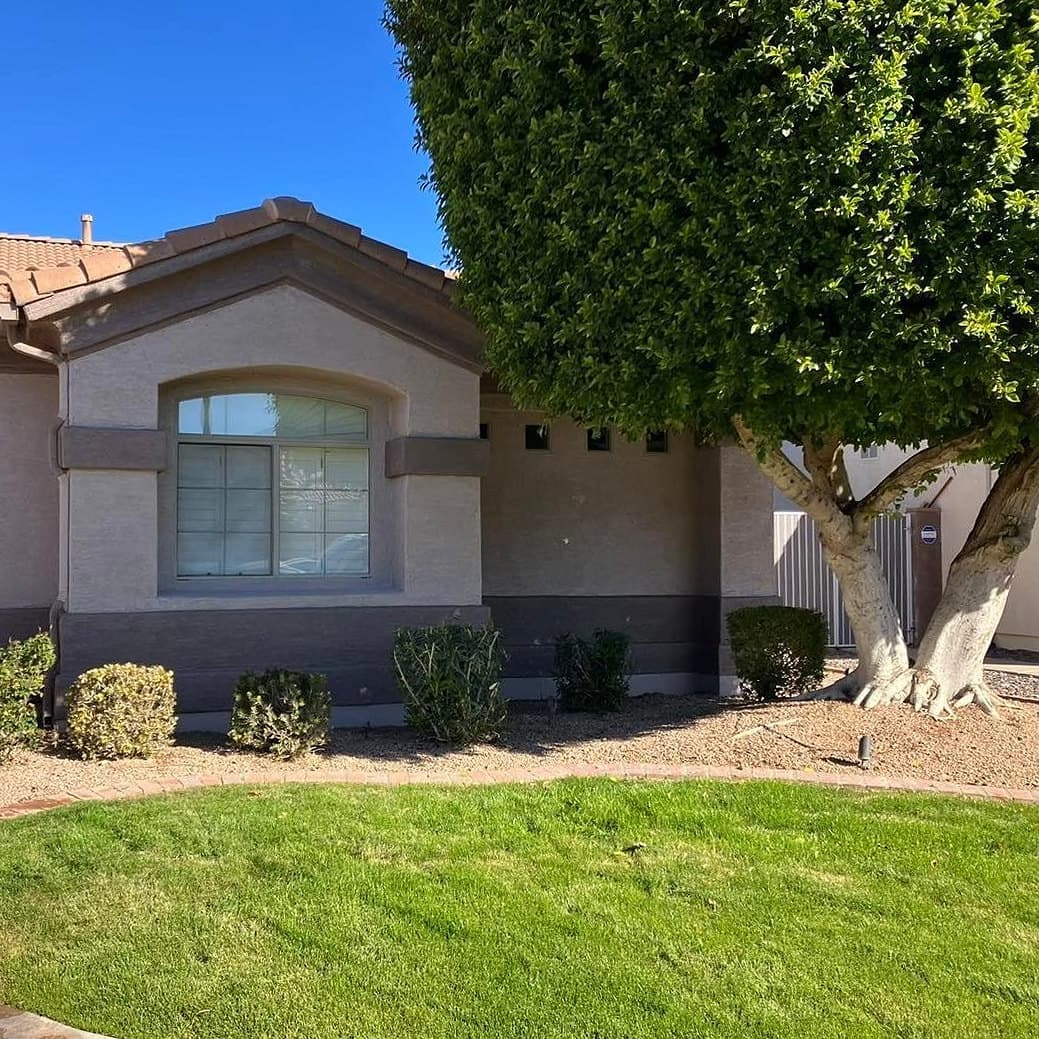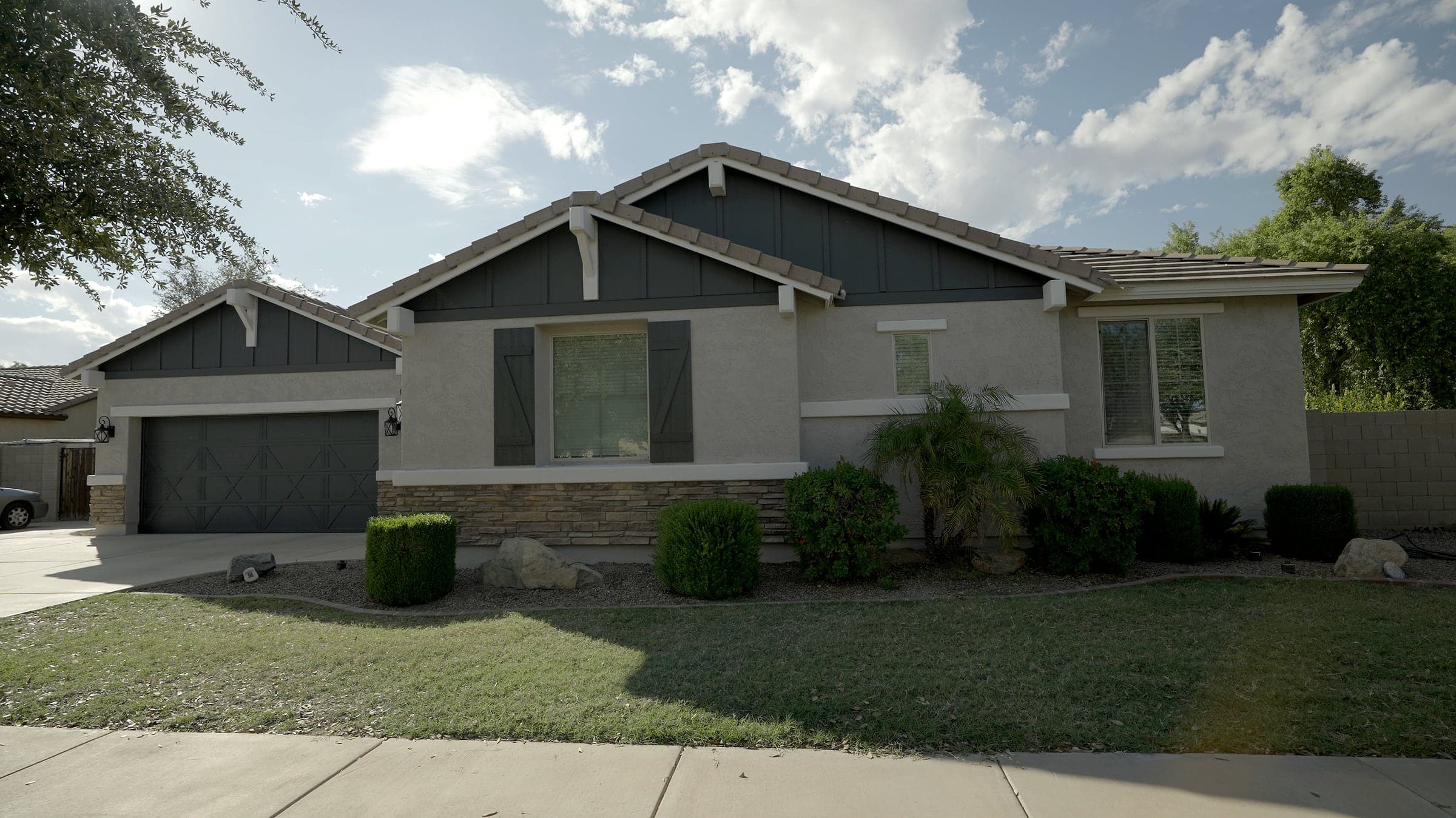
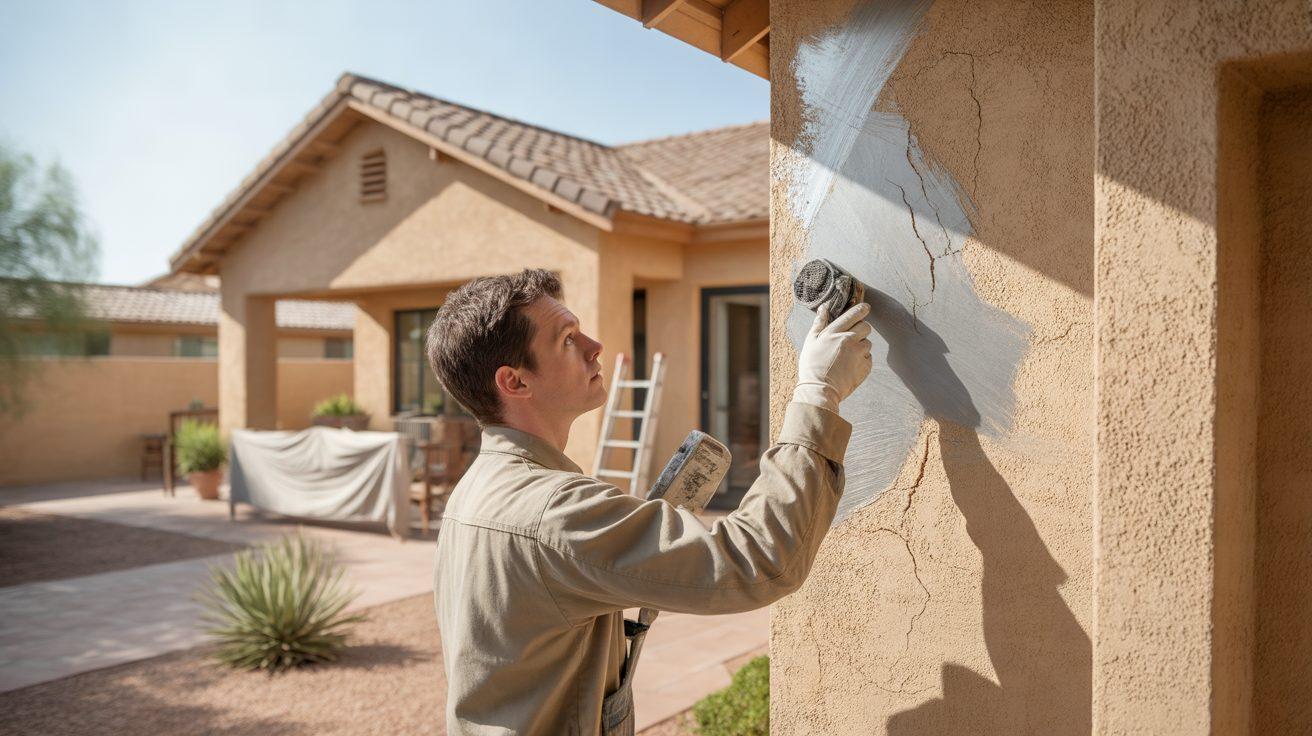
House painting Mesa AZ homeowners need for an existing home begins with a careful inspection, necessary repairs, surface preparation, and durable coatings matched to the way the property has aged. A qualified repaint professional defines the work in writing, protects occupied spaces, and corrects coating failures before fresh paint seals them in.
Table of contents
- What does house painting Mesa AZ for an existing home include?
- How should you compare house painting Mesa AZ contractors?
- What does thorough Arizona repaint preparation actually look like?
- Which paint materials hold up best on Mesa homes?
- What interior, exterior, cabinet, and fence painting services might your home need?
- How do timing, access, and communication affect a repaint project?
- Frequently asked questions
What does house painting Mesa AZ for an existing home include?
House painting in Mesa for an existing home includes evaluating the old coating, repairing defects, preparing each surface correctly, applying compatible primer where needed, and installing finish coats designed for the location. Repainting is not simply changing color. It is maintenance that restores the protective coating system around your home.
A coating system is the complete working combination of the existing surface, preparation, primer, caulk, and finish paint. Every layer must adhere to the layer beneath it. If loose paint, chalking, failed caulk, or moisture damage remains underneath, a new topcoat can look clean briefly but fail early.
Mesa homes face distinct conditions. Intense ultraviolet exposure breaks down exterior binders over time. Heat causes building materials to expand and contract. Wind deposits dust in textured stucco and around trim details. Monsoon moisture can enter open cracks, failed joints, and unsealed exposed wood. A repaint professional should inspect these conditions rather than price every home as a simple, identical square-foot project.
For a whole-home project, ask for a walkthrough and a written scope tied to your home’s actual surfaces. Our guide to whole-house painting costs in Arizona explains why surface condition, access, repairs, and coating choices matter more than a broad online price range.
How should you compare house painting Mesa AZ contractors?
You should compare Mesa repainting contractors by the clarity of their preparation plan, material specifications, protection procedures, and written scope—not by the lowest quoted price alone. A lower bid often reflects fewer preparation steps, unclear repair allowances, thinner coverage, or exclusions that become surprises after work begins.
Ask each contractor to walk the property with you. Point out areas that concern you: peeling fascia, hairline stucco cracks, faded elevations, water marks, cabinet wear, or a fence that is splitting and graying. A professional should explain what caused the condition, which repair is appropriate, and what the paint can and cannot solve.
Use this comparison framework before choosing a repaint pro:
| Approach or proposal feature | What it usually tells you | Questions to ask | Best use |
|---|---|---|---|
| Lowest-price, brief quote | Scope may be incomplete or preparation may be assumed rather than specified. | How will failed paint, cracks, caulk, and damaged areas be handled? How many finish coats are included? | Only after the full scope matches other proposals. |
| Detailed written repaint proposal | The contractor has identified surfaces, preparation, materials, protection, and exclusions. | Which surfaces are included? What repairs are included, and what requires approval if uncovered? | Best basis for comparing value and accountability. |
| Spot repairs with touch-up painting | Solves isolated damage without changing every surface. Color and sheen blending can be difficult on weathered paint. | Will the repaired area blend, or does the full wall, elevation, or section need coating? | Localized damage where surrounding paint remains sound. |
| Full exterior repaint | Restores a consistent protective finish across exposed surfaces. | Which trim, doors, fascia, block walls, gates, and metal details are included? | Broad fading, coating wear, repeated touch-ups, or a color change. |
| Cabinet refinishing or repainting | Requires more controlled preparation than wall painting because doors and drawers receive frequent handling. | Will doors and drawers be removed, labeled, cleaned, sanded, primed, and finished separately? | Worn but structurally sound cabinets. |
A clear scope should identify:
- surface areas,
- colors,
- sheen levels,
- repair methods,
- primer use,
- number of finish coats,
- protection of landscaping and furnishings,
- cleanup, and
- what is excluded.
It should also state how hidden damage or additional repairs will be communicated before that work proceeds. You should not have to guess whether “exterior painting” includes soffits, garage doors, gates, fascia, or perimeter walls.
For Mesa-specific service information and a project conversation, visit iPaintHomes’ Mesa painting service page.
What does thorough Arizona repaint preparation actually look like?
Thorough Arizona repaint preparation removes or stabilizes failed material so the new coating can form a reliable bond with a clean, dry, sound surface. Paint adhesion is mechanical and chemical: the coating must wet the surface, grip its texture, and cure without contamination, trapped moisture, or a weak layer underneath.
Exterior preparation commonly starts with cleaning. Dust, oxidation, chalk, cobwebs, and airborne residue interfere with adhesion. Chalking is the powdery residue left when an aging paint binder breaks down and releases pigment at the surface. Wiping a faded wall with your hand and seeing colored powder is a practical sign that cleaning and possibly a binding primer may be needed.
The correct sequence depends on the substrate and the condition discovered during inspection.
- Stucco: Clean thoroughly, scrape loose coating, address cracks correctly, and prime bare or compromised areas as needed. Paintable sealant can handle small, non-moving gaps at trim transitions. It cannot repair a structural crack or stop movement in the wall.
- Wood fascia and trim: Replace or repair deteriorated material first. Scrape peeling edges, sand for a smooth transition, spot-prime exposed wood, and seal appropriate joints. Painting over soft or decayed wood only conceals the problem.
- Metal details: Remove loose rust and failing coating, clean the surface, and use a compatible primer where bare metal is exposed. Skipping this step allows corrosion to continue beneath the finish.
- Previously painted siding or trim: Test adhesion and identify peeling, blistering, and alligatoring. Alligatoring is a cracked paint pattern resembling reptile skin, usually caused by aging, incompatible layers, or a coating that lost flexibility. It must be removed or stabilized; new paint will not erase the underlying failure.
Protection is part of preparation as well. A careful crew protects windows, hardscape, plants, rooflines, fixtures, floors, furniture, and adjacent finishes before spraying, rolling, brushing, or sanding begins. On an occupied home, the work plan should also address access, pets, gates, daily cleanup, and areas that need to remain usable.
Which paint materials hold up best on Mesa homes?
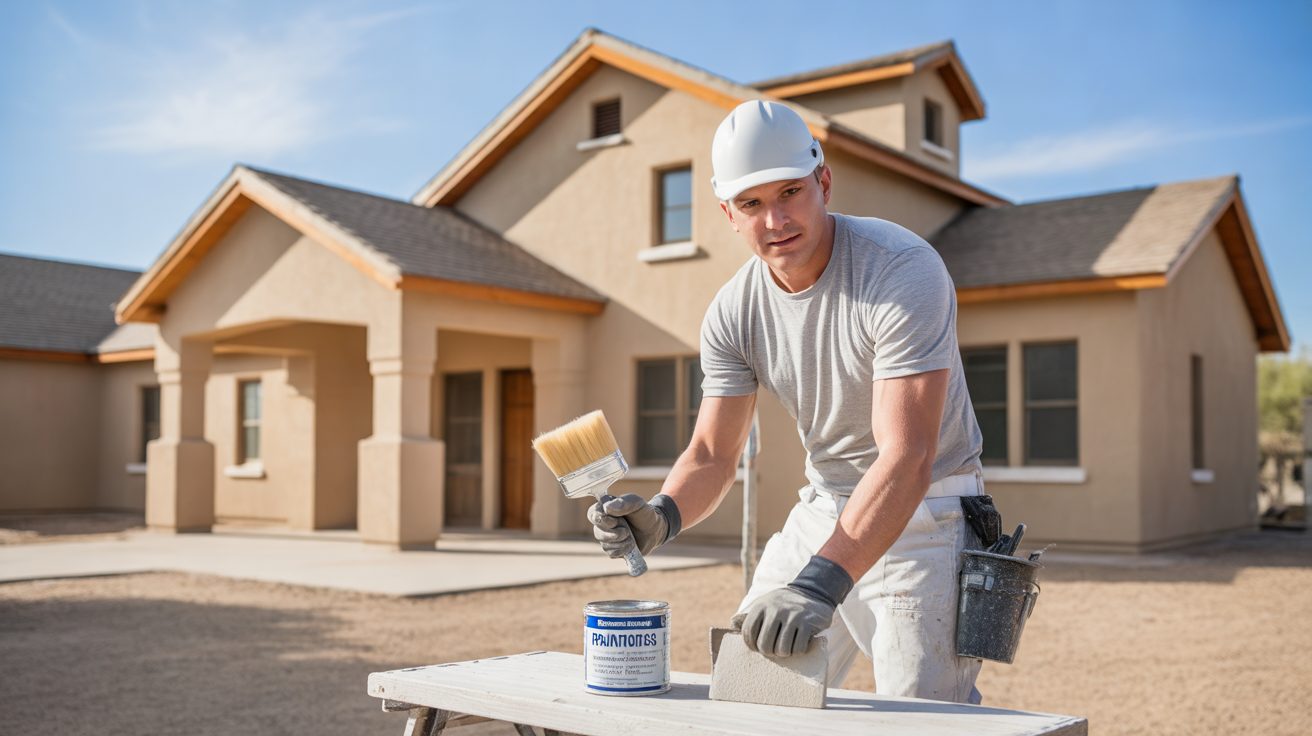
The best repaint material for a Mesa home is a high-quality coating selected for the surface, exposure, and existing paint system, with exterior-grade acrylic coatings often providing the right balance of adhesion, color retention, and flexibility. Material quality matters, but correct preparation and appropriate film thickness determine whether even a premium coating performs as intended.
Exterior paint must resist ultraviolet degradation while flexing through heat cycles. A coating that is too rigid can crack as substrates move. A coating that holds moisture where the assembly needs to breathe can create its own problems. The right product depends on whether you are coating stucco, wood, metal, masonry, or a previously painted surface.
Paint sheen also deserves a deliberate choice. Higher-sheen finishes are generally easier to clean and more resistant to handling, but they reflect more light and reveal surface imperfections. Lower sheens hide wall irregularities better but may show marks sooner in high-contact rooms. Review the practical differences between matte and satin wall finishes before finalizing interior colors and sheens.
For homeowners prioritizing lower-odor or more environmentally considered interior options, iPaintHomes can also discuss eco-conscious paint choices that fit your room, finish, and performance needs.
What interior, exterior, cabinet, and fence painting services might your home need?
Your home may need one focused repaint service or a coordinated plan that addresses interior rooms, exterior surfaces, cabinets, and fences on separate schedules. Each surface has a different wear pattern, preparation process, and finish requirement.
Interior painting improves daily living spaces and protects walls from scuffs, hand oils, minor moisture exposure, and normal household wear. A professional interior repaint includes moving or protecting furnishings as agreed, repairing nail holes and drywall imperfections, sanding repaired areas, addressing stains with appropriate primer, cutting crisp lines, and applying a consistent finish. Bathrooms, kitchens, hallways, and children’s rooms often benefit from more washable finishes than low-traffic bedrooms.
Exterior painting is protective maintenance. It includes the visible body color, trim, doors, fascia, soffits, and other defined components. South- and west-facing walls often weather differently from protected elevations. A knowledgeable contractor will inspect each side rather than assume the whole exterior has worn evenly. Learn more about the signs that determine how long exterior paint lasts.
Cabinet painting demands stricter process control than wall painting. Kitchen cabinets accumulate cooking residue, skin oils, and cleaning-product residue that can prevent adhesion. Doors and drawer fronts should be identified, removed when the scope calls for it, cleaned, deglossed or sanded, repaired, primed with a compatible bonding product, and finished in a controlled sequence. Rushing cabinet preparation leads to chips around pulls, edges, and high-touch zones.
Fence painting or staining begins with checking the material and condition. Wood needs cleaning, secure fasteners, replacement of unsound boards, and attention to dry or weathered grain. Metal fencing may require rust preparation. A fence coating must handle sun exposure while protecting vulnerable cut ends, joints, and edges where deterioration begins.
How do timing, access, and communication affect a repaint project?
Timing and communication affect repaint quality because paint needs suitable surface conditions and an organized work area to cure properly. A reliable contractor plans around weather, direct sun exposure, access restrictions, and the order in which areas should be completed.
Exterior work should not proceed over wet surfaces or during conditions that prevent proper curing. Direct desert sun can heat a wall far beyond the air temperature, which affects how quickly a coating sets and how it levels. A professional adjusts the work sequence by elevation, starts with suitable areas, and avoids forcing paint onto surfaces that are too hot or otherwise unsuitable.
Inside, your plan should cover room order, furniture handling, ventilation, pets, alarm systems, and daily access. For cabinets, plan for temporary kitchen disruption. For exterior projects, plan for vehicles, gates, pool areas, and landscaping. Personalized service means the crew works from a plan built around your home, not just a production schedule.
Contact iPaintHomes — (480) 232-5474 to schedule a Mesa repaint consultation and receive a clear, homeowner-specific scope for your interior, exterior, cabinets, or fence.
Frequently asked questions
What is the average cost to paint a house in Arizona?
There is no useful single average cost to paint a house in Arizona because price depends on the home’s size, stories, surface condition, access, repair needs, number of colors, paint system, and whether trim, doors, or walls are included. A detailed on-site estimate is more reliable because it defines the exact preparation and coating work your home requires.
What is the best type of exterior house paint for Arizona?
A high-quality exterior acrylic coating selected for the specific substrate is often the best choice for Arizona because it can provide strong adhesion, flexibility through heat cycles, and resistance to fading and weathering. The correct product still depends on whether the surface is stucco, wood, metal, masonry, or a previously painted finish.
Do you need a license to paint in Arizona?
Arizona painting work may require a licensed contractor when the project exceeds the state’s handyman exemption or involves work requiring permits, so homeowners should verify the contractor’s current licensing status and whether it applies to the proposed scope. Do not assume that a painter is properly licensed simply because the work is described as cosmetic.
How often should you repaint your house in Arizona?
Arizona homeowners should inspect exterior paint annually and repaint before widespread peeling, chalking, exposed substrate, failed caulk, or severe fading allows moisture and sun damage to progress. Repaint timing varies by surface exposure, coating quality, preparation, maintenance, and the condition of the prior paint system.
Should a Mesa painting estimate include prep work?
A Mesa painting estimate should list preparation work because cleaning, scraping, sanding, patching, caulking, priming, and repairs determine how long the repaint will last. An estimate that only lists colors and a total price leaves too much room for missed work and inconsistent expectations.
Can fresh paint fix cracks in stucco?
Fresh paint can improve the appearance of minor stable stucco cracks after proper repair, but paint cannot correct structural movement, active moisture intrusion, or a crack that continues to open. A repaint contractor should identify whether a crack is cosmetic, needs sealant, needs patching, or requires further evaluation before painting.
Is cabinet paint different from wall paint?
Cabinet coatings are selected and applied for frequent contact, cleaning, and abrasion, while wall paint is designed mainly for broad vertical surfaces and ordinary household wear. Cabinet longevity depends heavily on degreasing, sanding or deglossing, bonding primer, controlled application, and allowing adequate cure time before regular use.